




Neuroscience 101: Amy explain the human brain in more detail.
Click to Watch
Click to Watch


How a PCS Move Impacts Your
Child's Psychological Development
The brain is wired to seek predictability because it’s safer to rely on known patterns. The prefrontal cortex helps us plan and regulate responses, while the hippocampus stores memories of what’s familiar. When something changes and doesn’t match what we expect, the amygdala—a fast, emotional processor—can interpret it as a threat. This triggers the fight-or-flight response, a survival mechanism that gears us up to either confront or escape danger. Even when the change isn’t physically threatening, the unfamiliar can set off this internal alarm. The brain craves returning to a steady state, where the environment matches what we know. That’s why change—especially unexpected change—can feel uncomfortable. But once the brain begins to recognize new patterns and integrate them into memory, that threat response eases, allowing us to adapt.
When the fight-or-flight response is triggered in kids due to unfamiliar situations, it can manifest as anxiety, fear, or stress. Since their prefrontal cortex is still developing, they may have a harder time regulating these emotions. Without the familiar cues their brain expects, they can feel a heightened sense of uncertainty. Supporting them with consistency helps their brain move from alarm to adaptation.
Effects During PCS
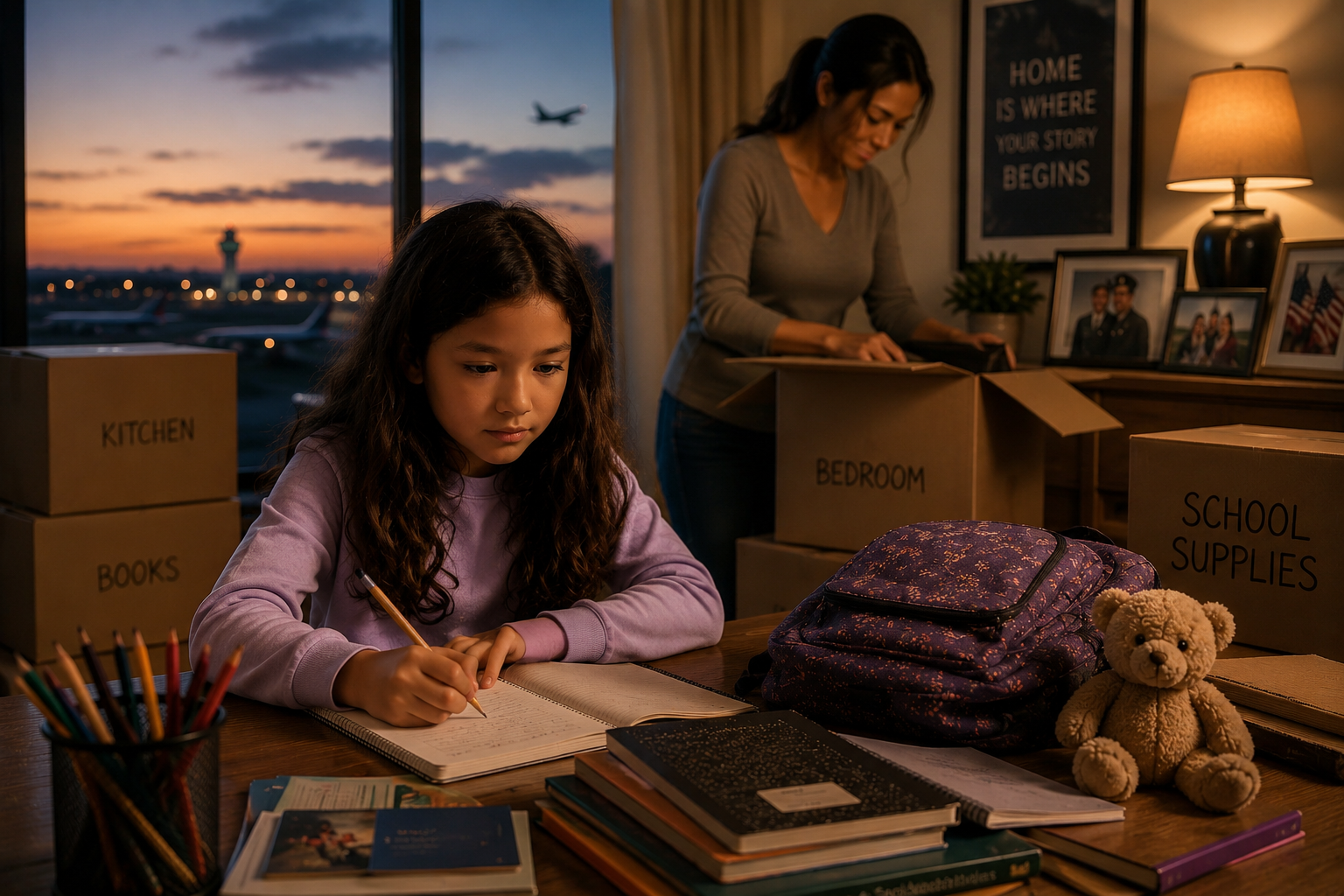
For a child, PCS (Permanent Change of Station) isn’t just a move—it’s a disruption of their world. They leave behind friends, schools, and familiar places, often without the emotional tools adults have. Communication with old friends might be limited, and starting fresh in a new environment—new culture, new school—can feel daunting. Unlike adults, kids have fewer resources to cope or adapt, relying heavily on family and school support. Navigating new social norms, trying to form friendships, and adjusting to unfamiliar routines can spark feelings of isolation or uncertainty. Without prior experience or control over the move, kids must adapt quickly. Each PCS asks them to rebuild their sense of belonging with limited familiarity. While they are resilient, it’s a process that can stir up complex emotions, from loss to hope, as they search for stability in a brand-new chapter.
When kids understand the purpose of the move, the prefrontal cortex starts creating a logical framework, reducing the unknown. Familiar routines or “home base” items engage the hippocampus, offering reassuring memories. Staying connected eases the amygdala, calming that alarm. As they build new connections, the brain forms fresh positive associations. In short, each step transforms the unknown into something predictable, helping the brain relax and adapt.


Veteran Owned

A.I Intelligence

Military Solutions

Financial Forecasting

Data Driven

Client-Centered

Tailored Approach

Measurable Results
Enjoy the benefits, you Deserve
Funding & Market Analysis
.
.
Guidance
Build for Military Community
.
.
Military Members
Data Science Meets Military insight
.
.
Guidance
